
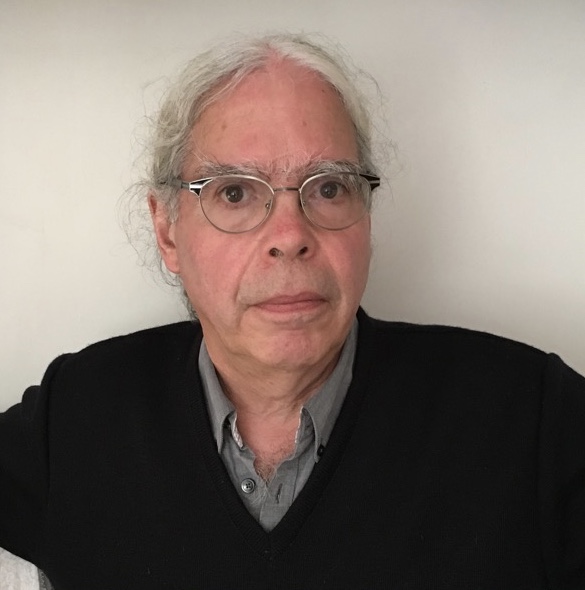
Zaproszenie na wykład Prof. Leonarda Muellnera
W imieniu Centrum Interdyscyplinarnych Badań Relacji między Kulturą Oralną i Piśmienniczą
zapraszamy na kolejne spotkanie w ramach serii „Co chciałbym wam powiedzieć o tradycji oralnej”,
którego gościem specjalnym będzie
Prof. Leonard Muellner
Professor Emeritus of Classical and Early Mediterranean Studies, Brandeis University
Temat spotkania:
Homeric Multiformity in Formula and Theme: Theory, Discovery, and Interpretation
Spotkanie odbędzie się dnia 11.12. 2025 r. o godzinie 17:00
Wykład będzie transmitowany na platformie Teams:
Wykład z serii Oral Tradition | Dołączanie do spotkania | Microsoft Teams
Zapraszamy również do udziału stacjonarnie w Sali 115 im. Prof. J. Woronczaka w budynku przy ul. św. Jadwigi 3/4
Homeric Multiformity in Formula and Theme: Theory, Discovery, and Interpretation
An essential problem that the Homeric poems present to us is that they are the product of a centuries-long tradition of performers interacting directly with audiences which needed no reminders of the multiformity and the depth of resonance of their own tradition. On the other hand, we are by default ignorant of that tradition, since we have only have one example of it, and our persisting in that ignorance gives us license to substitute our own culture’s understanding of the poems’ content instead of trying to recover the depth of meaning that the poems had within their own tradition. My project is to discuss the multiformity of Homeric Epic both on the level of the diction, of the system of formulas, and on the level of theme, of larger constellations of formulas into recurring modules of content — on both levels for a reason, because the discovery of multiformity and its interpretation are homologous in them. I will discuss the occurrence of a formulaic variant attested in what are thought of as the secondary mss. of the Iliad, in itself an important point, and I will argue that it is not the product of a scribal error or an emendation. Then I will move on to two examples of thematic multiformity in a discussion of the seizing of Briseis by Agamemnon in the first rhapsody of the Iliad, then in a comparison of the portrayal of Achilles in a well-attested tradition of vase painting as against its portrayal in the Iliad itself. My point will be to show how, ironically, the Homeric text transmitted to us actually does preserve multiforms if we can find the right viewpoint to discern them, and also to show how an understanding of those multiforms enriches and deepens our understanding of the poems and the precision and power of their composition.
Biographical note:
Leonard Muellner, Professor Emeritus of Classical Studies at Brandeis University and Secretary of the New Alexandria Foundation. His scholarly interests center on Homeric epic, with special interests in historical linguistics, anthropological approaches to mythology, and the poetics of oral traditions. Among others he is the author of The Anger of Achilles: Mênis in Greek Epic (Ithaca NY, 1996) and The Meaning of Homeric EYXOMAI Through its Formulas (Innsbruck, 1976). From 2002 to 2015, he was Director for “In Open House | The Free First Thousand Years of Greek”, with formation Technology and Publications at the Center for Hellenic Studies in Washington, DC.


